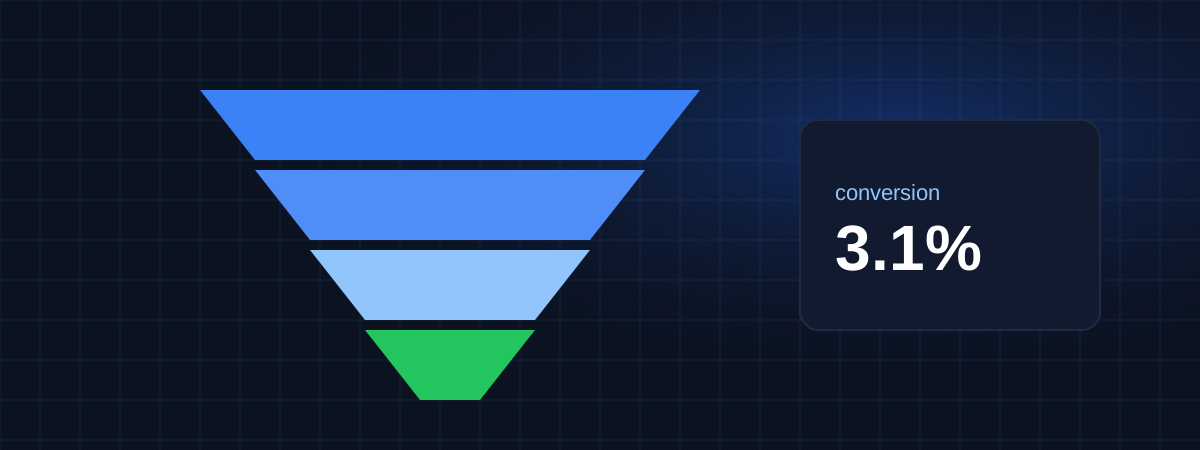
Visits don't pay the bills
A website can get plenty of traffic and still produce no leads, sales or sign-ups. That's why tracking conversions matters as much as tracking visits. The articles in this category explain how to define what counts as a result on your site and how to measure it consistently.
We cover the metrics that help answer whether the website is doing its job, and also the ones that look important but say little when viewed on their own.
What you'll learn
- How to choose the conversions that make sense for your business, whether that's a form submission, a purchase or a click to WhatsApp.
- Which metrics to follow alongside conversions to understand the context.
- Why conversion rate needs to be read together with the traffic source.
- How to avoid double counting and other common setup mistakes.
Who it's for
For anyone who needs to show the return on the website and on campaigns: business owners, marketers and agencies. The concepts apply to online stores, service websites, blogs that capture leads and product pages.
Start with the goal
Before configuring any tool, write down in one sentence what your website needs to achieve. From there it's much easier to choose what to measure and what to ignore. Then, whenever you change something that may affect conversions, such as button copy or the number of fields in a form, write down the date.
WEBPilot keeps that history of changes per website, so you can relate each change to how results evolve. Learn more about traffic analytics in WEBPilot.