Organic vs Paid Traffic: What's the Difference?
How organic and paid traffic differ in cost, speed and stability, how analytics tools tell them apart, and how to decide where to put your effort.
When people talk about growing a website, the conversation usually splits into two camps: "we need better SEO" and "let's run some ads". Both bring visitors. They just do it in very different ways, and mixing them up in your reports leads to bad decisions.
The short definition
Organic traffic comes from unpaid search results. Someone types a question into Google or Bing, sees your page in the regular results and clicks.
Paid traffic comes from clicks you pay for: search ads, display banners, sponsored posts on social networks, shopping ads and similar formats.
Both can come from the same search engine and even the same search. The difference is whether you paid for that specific click.
How they behave differently
Cost
Organic clicks don't have a price per click, but they aren't free. They cost the time and money spent writing content, improving pages and fixing technical problems. That cost is paid upfront, and the return comes later.
Paid clicks have a clear price. You know what you spent yesterday and how many clicks it bought. When you stop paying, the clicks stop too.
Speed
Ads can bring visitors the same day they go live. Organic results usually take weeks or months to move, and you can't fully control when.
Stability
A page that ranks well can keep bringing visitors for a long time with little extra work. It can also lose positions after a search engine update or when a competitor publishes something better.
Paid traffic is as stable as your budget and your account settings. A paused card, an expired budget or a rejected ad can drop it to zero overnight.
Intent
This depends more on the keyword than on the channel. Someone searching "best running shoes for flat feet" is researching; someone searching for a product name plus "price" is closer to buying. You'll find both kinds of intent in organic and paid traffic.
How analytics tools tell them apart
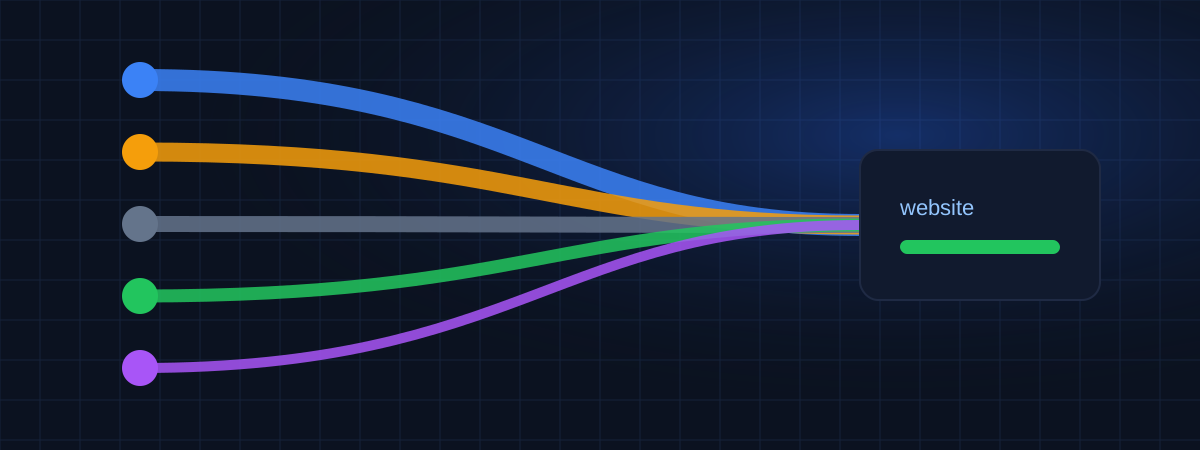
This is where many reports go wrong. An analytics tool can only classify a visit based on what it receives:
- The referrer: the address of the page that sent the visitor, such as a search engine results page.
- Click identifiers: parameters that ad platforms add to the link, such as
gclidfor Google Ads when auto-tagging is on. - UTM parameters: tags you add to links yourself, such as
utm_medium=cpc.
If a visit comes from Google without any ad identifier, it's counted as organic. That means a paid campaign without auto-tagging or UTM tags can be counted as organic search, inflating your SEO numbers and making your ads look useless. Make sure auto-tagging is enabled in Google Ads (see Google's page About auto-tagging) and tag other paid links with UTM parameters, as explained in How to Use UTM Parameters to Track Campaigns.
How they influence each other
Organic and paid traffic aren't fully independent:
- Running ads on your own brand name can take some clicks that would have gone to your organic result anyway.
- A campaign that makes people aware of your brand often increases searches for your name later, which show up as organic or direct traffic.
- Pages built for ads (fast, clear, focused) often convert better for organic visitors too.
That's why looking at each channel in isolation can be misleading. When you start or stop a campaign, look at what happens to the other sources in the same period.
Which one should you invest in?
There isn't a universal answer, but these questions help:
- How fast do you need results? If you're launching something next week, ads are the realistic option. SEO is a long-term project.
- Do you know which messages work? Ads are a quick way to test headlines and offers. What works can later inform your organic content.
- Can you sustain the cost? If the business only works while you pay for every visitor, check whether the margins support it in the long run.
- Is there search demand? If nobody searches for what you sell yet, organic search will be slow. Other channels, like partnerships or social media, may be better.
Most businesses end up using both: ads for speed and testing, organic content for steady, compounding traffic.
Keep a record of what you did
Whatever mix you choose, write down when you started or paused campaigns, changed budgets or published important content. When the chart moves, that record tells you which channel to look at first. In WEBPilot, that is what the strategy timeline is for, and the traffic sources view will separate organic, paid, direct, referral and social visits once data collection is live.
Summary
- Organic: no cost per click, slower to build, can last a long time.
- Paid: predictable cost, fast, stops when the budget stops.
- Your reports are only as accurate as your tagging. Enable auto-tagging and use UTM parameters.
- Look at both channels together, especially when you change one of them.
WEBPilot articles are written and reviewed by our editorial team. They don't contain sponsored content.
Register your websites in WEBPilot and keep a dated record of every change you make. Strategy Tracking →